Aluminium plays a central role in Construction, Automotive, Packaging and Clean
Energy Industries. As the world’s most widely used non-ferrous metal, Aluminium’s
unmatched combination of being lightweight, durable, conductive, and fully recyclable
makes it indispensable.
Highlights Mar 2025 – 2026
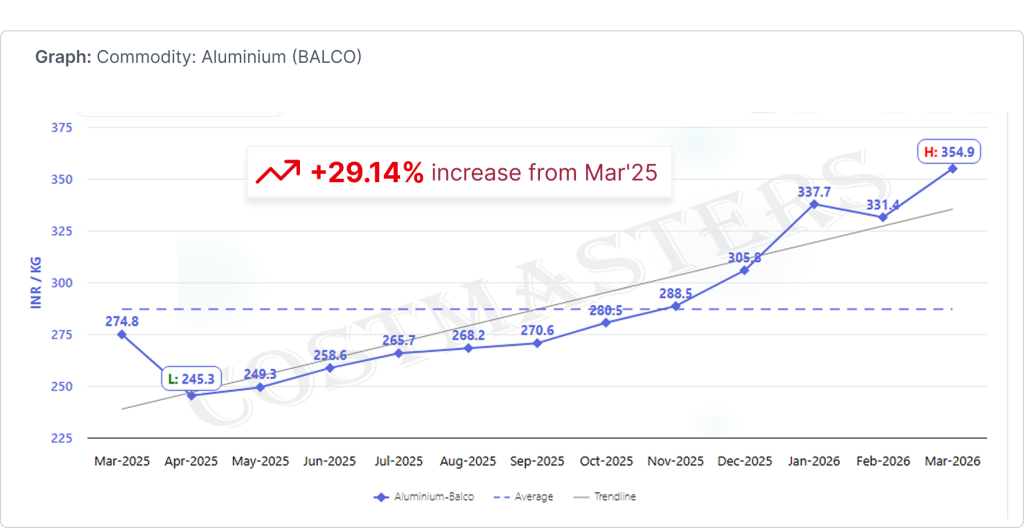
March – April 2025
Aluminium prices fell from to about ₹245/kg as concerns over global economic growth and
new tariffs weighed on industrial metals demand.
July – September 2025
Prices rose from roughly ₹260/kg to about ₹270/kg as global inventories declined and
tightening supply supported the Aluminium market
December 2025 – January 2026
Aluminium increased to about ₹330/kg as low global stockpiles and strong demand from
manufacturing and energy-transition sectors pushed prices higher
January – February 2026
Prices fell around 5% as worries over possible new tariffs and profit-taking pushed metals
lower. The dip was short-lived.By late February, prices were climbing back, driven by
tightening global supply and steady demand from the electric vehicle and clean energy
sectors.
Key Drivers
China’s Production Cap
China enforces a strict government ceiling on primary Aluminium output, leaving virtually no
room to expand supply when prices rise. This acted as a persistent structural constraint
that kept the prices elevated.
Declining Global Inventories
LME warehouse stocks fell steadily through 2025, leaving little metal available to meet
demand. This kept prices firm even when the broader economy weakened.
EV, Solar & Grid Infrastructure Demand
Electric vehicles, solar panels, and power grids all rely heavily on aluminium, and demand
from these sectors kept growing even when the broader economy slowed. This acted as
a safety net for prices, stopping them from falling as steeply as they have in previous
downturns.
US Import Tariffs
Escalating US tariffs on aluminium imports disrupted decades of established global trade
flows and pushed domestic premiums to record highs. Tariff announcements also
periodically triggered broader sentiment-driven sell-offs across metals markets
Geopolitical Supply Disruptions
Conflict in the Middle East suspended gas supplies to major Gulf smelters, forcing
production shutdowns in a region supplying a significant share of global output. Combined
with earlier bauxite and alumina disruptions in Guinea and Australia, geopolitical risk
became a recurring and increasingly impactful price driver
Market Impact
Global
A near 47% price rise over the year made Aluminium significantly more expensive
for industries like automotive, construction, and packaging — sectors that have
no easy substitute for the metal.
US tariffs broke decades of established trade routes, forcing buyers and sellers to
EV, Solar & Grid Infrastructure Demand find new partners and adding cost and delays across global supply chains.
India
Higher global prices helped aluminium producers earn more, but hurt downstream
industries like auto parts, cables, and packaging that depend on aluminium as a
key raw material.
With the US imposing steep tariffs, Indian exporters lost their second-largest
market overnight and had to pivot to Europe and Southeast Asia to find new
buyers.
Forecast and Market Outlook
Market analysis suggest Aluminium prices to remain elevated through 2026, with China’s
production ceiling limiting supply growth while EV, solar and grid demand continues to
expand — keeping the structural floor under prices firm. Any additional disruption in
output from Gulf smelters could push prices to fresh highs, while an easing of tensions
could trigger a sharp pullback from current levels.