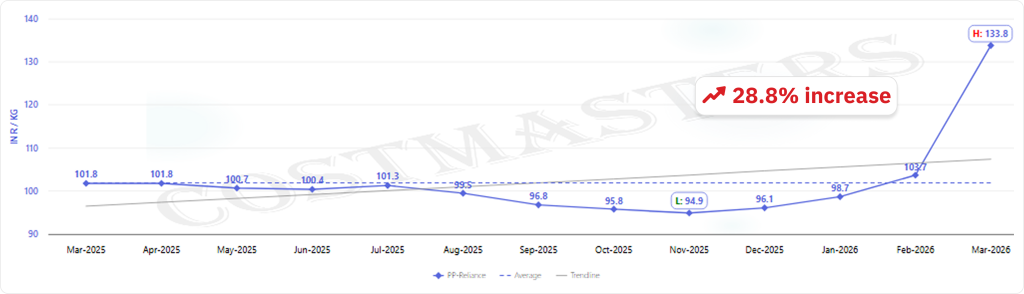
Polypropylene is a versatile thermoplastic polymer used in packaging, automotive, consumer goods, medical and textile industries. Throughout 2025, Prices remained weak due to global oversupply , before experiencing severe upward revisions in March 2026 driven by Middle Eastern geopolitical disruptions.
Highlights Mar 2025 – 2026
April–September 2025
Prices remained largely stable before declining in September due to weak demand and increased low-cost imports, with the drop further supported by easing input costs following a decline in global crude oil prices.
March 2026
Multiple steep upward price revisions, increased rates by tens of thousands of rupees per metric tonne. This happened because raw plastic inputs surged 50% amid Strait of Hormuz tensions.
Key Drivers
Global Oversupply & Import Pressure (2025)
Higher polypropylene production, especially in Asia, increased market supply and put downward pressure on prices in India during 2025
Lower Feed stock Costs (Late 2025)
A decline in feedstock costs reduced production expenses, leading to softer polypropylene (PP) prices in the second half of 2025.
Middle East Supply Disruption (Feb–Mar 2026)
Tensions in West Asia disrupted supply routes & raised crude-linked costs, resulting in a sharp increase in polypropylene prices in early 2026
Market Impact
Polypropylene price spikes have forced many plastic-processing MSMEs to curtail or temporarily halt operations, disrupting domestic supply, while Automotive, FMCG, and Medical Devices sectors face a 20–50% rise in packaging and component costs, driving price hikes and cost optimization measures.
Market Outlook
Near-term pricing will remain volatile as long as shipping bottlenecks persist. While domestic capacity is projected to rise, immediate market stability depends entirely on resolving West Asia tensions to prevent further production halts.